

A long time ago in a galaxy far,  far away….

A long time ago in a galaxy far, far away….

November 2021

Everything Old

A long time ago in a galaxy far, far away….

by Corbin Crable


A few weeks ago, I saw an advertisement for a gentleman buying vintage toys here in Overland Park. He had set up shop at a local hotel and would greet dozens of sellers every day for a week, analyzing the condition and worth of the items they brought in to sell. Many people who hauled in large totes and boxes of items to sell appeared fairly confident that they had treasures worth a fortune, only to be turned away because their items were too common, not old enough, or in poor condition. Others left the toy show looking quite pleased with themselves.

This gentleman didn’t accept any toys produced since the mid-1980s; he seemed only interested in toys made earlier than that. I was able to take a peek at his haul and recognized some items I remember owning when I was a child; others were obviously older and in pristine condition – a Flintstones board game, a Justice League playset, a set of clothes and accessories for a Jackie Kennedy doll. All of them appeared to have been meticulously cared for and preserved over the decades.


It’s a message I wish I had gotten into my thick skull as a child, but I grew up in the era of the original “Star Wars” trilogy (I remember watching “Return of the Jedi” at the original Glenwood Theatre in Overland Park, KS, for my fifth birthday), a time during the late 1970s and early 1980s when it seemed like “Star Wars” toys were everywhere you looked. Demand for the toys was high, much like the Cabbage Patch Kid craze of the early 1980s (remember fighting over the last one with a flurry of crazed moms in a packed department store on Black Friday because your kid just HAD to have one?). Of course, like any red-blooded American boy in the ‘80s, I collected these “Star Wars” action figures and playsets with unbridled enthusiasm.

Not considering the trilogy’s staying power and the potential value of some of these “Star Wars” toys decades later, I played with them with the same zeal as … well … a kid in a toy store. I was an imaginative child, setting up elaborate “movies” in my head in which these toys starred. My universe was not gentle to them – these action figures were thrown around with reckless abandon, dirtied, decapitated, and the arms and legs pulled off. In other words, they were well loved.

I ignored my father’s pleas to take care of these toys, as any shortsighted kid would, because I didn’t see the point in preserving such items. Toys were to be played with, not kept in their original boxes and placed up on a shelf. Years later, I sold my beloved “Star Wars” toys in a garage sale. Only in my adulthood have I come to appreciate their role in pop culture history – and nostalgia, too. My father still jokes about selling those action figures and how some of the more rare, original action figures from 1977 and 1978 – still in their original box with all of the accessories – often sell for thousands of dollars at auction. It’s painful to hear, for sure.

Now, as I watched people trudge through the lobby with their hauls of toys, most of them well cared for over the years, I could only sigh a small statement of self-forgiveness for my years of ignorance and vow to better appreciate such items that played such an important role in my childhood and that of my fellow Gen Xers. ​


Contact Corbin Crable at editor@discoverypub.com.

Turn that music up

Turn that music up

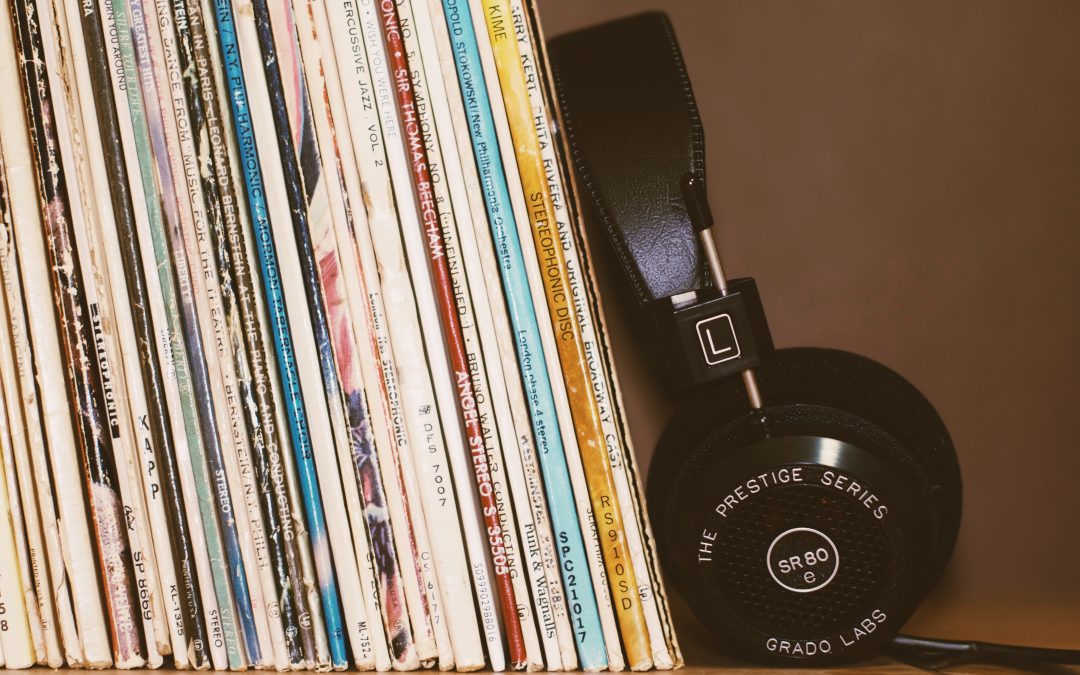
Photo by blocks on Unsplash

October 2021

Everything Old

Turn that music up

by Corbin Crable


When it comes to the media format wars, we all have those older items with which we simply can’t part or that we haven’t sold or thrown away yet – a CD here, a VHS tape there, here a laserdisc, there an iPod Shuffle.

Media, just like fashion, is cyclical, and although different formats fall out of favor with consumers as the years pass, you can bet that, thanks to the power of nostalgia, they’ll be back around again, maybe in our lifetime, maybe in that of our children or grandchildren.

And so it is with vinyl records. You might still have a large collection of records either boxed in your basement or displayed proudly somewhere in your home. Well, I have some great news for you: They’re cool again.

Well, they’ve seen a resurgence in popularity for a little more than 15 years now. And last year, in 2020, records finally outsold CDs for the first time since 1986, according to the Recording Industry Association of America.


When I was a teacher and it came time to discuss music in my Mass Media and Society class, my students were visibly bored by my lectures on both the record player and the CD. They were the first generation raised solely on a steady digital music, much of which they didn’t have to pay for, thanks to the preponderance of streaming services and piracy software. These youngsters were amazed that anyone would actually pay for their music.

Of course, I shared with these students that music in the mid-20th century and later provided a vehicle for socializing, and that record stores, both standalone and within shopping malls, were gathering places for young people to discuss music trends, the latest albums, and more. Teenagers would stand around, don a pair of headphones, and listen to albums from their favorite musical artists. Later, in the same way that families would gather together around the TV for that week’s episode of their favorite program, groups of teens would gather at the home of a friend for a listening party. The era of records was an era of being brought together by the power of music, and now that records themselves are now popular again, it feels like that natural socialization that came with them has returned, too. Pop into any record store sometime and you’ll see what I mean.

Some purists insist that music published on records actually sounds better than other formats that came after it. I’m not sure about that, but one does have to wonder when (or if) we’re going to see the triumphant comeback of the 8-track or the cassette tape.

I hope this month’s cover story on the surge in vinyl’s popularity puts a song in your heart and a hum on your lips as you remember the albums that have remained most important to you. And if it inspires you to add to your collection, be sure to make a trip over to the independent music seller in your town, because small merchants always need the support of the community in which they operate. Help them keep the music alive and on the turntable for years to come.

Let’s make a deal: Haggling part of antique culture

September 2021

Everything Old

Let’s make a deal: Haggling part of antique culture


by Corbin Crable


You know the feeling – while browsing in your favorite antique store, you stumble across a vintage treasure you absolutely must have. You glance at the price tag – “I don’t want it that badly,” you tell yourself as you see a number that’s just a tad out of your budget. Picking it up, you silently wonder if the seller would take offers on the item.

Well, don’t just stand there – take your treasure to the cash register and ask!
It’s a lesson many of us have learned the hard way. By nature, I’m a passive person – someone who doesn’t like making waves where sales are concerned.
And then, eight years ago, I traveled to India.

On the subcontinent, as it is in many other places across the globe, haggling is a way of life. It’s an art that at first seemed intimidating but, after much practice, became second nature. I would approach a shopkeeper and inquire about the price of a small Taj Mahal statuette. The shopkeeper would name his price, and I’d wince, lightly shake my head, and respond, “That’s. a bit too much.” I’d continue browsing his wares and find a piece of jewelry. Holding it up to admire it, the shopkeeper would pounce, blurting out the price.
“I’ll take the statuette for your original price if you include this bracelet,” I’d learned to quickly respond.

Begrudgingly, the shopkeeper would agree. That’s all. Simple as that.
Here in the states, of course, you’ll be laughed out of any big-box department store if you attempted to execute such a tactic. But it’s worth keeping in mind that when it comes to flea markets, antique stores, and the like, a lower offer might be the only thing keeping you from the special piece you found that you simply cannot live without.

Who knows? Many stores have those items that have been collecting dust for years. To you, however, it’s the find of a lifetime. I’m sure the seller has just been waiting for a shopper like you to come along and snatch up the piece and would be more than happy to accept your offer.

Be aware, however, that sellers have done their proverbial homework on the items they sell, and as a buyer, you should do your own research, too. Just as a seller would know how much their items are worth, so too should you have an educated guess as to how much you might be able to request and still be taken seriously (this is, of course, where arming yourself with price guides will benefit you greatly). Don’t lowball the seller – give him or her an offer that is fair, something you would consider to be a good starting point.

To veteran shoppers, this is all just basic knowledge you learn in Antiquing 101. But often, it’s sound advice to advocate for a deal you believe will strike the ideal balance between fair to the seller and getting a good bargain for yourself. Consider this your annual reminder, then.
Happy haggling!

Corbion Crable can be contacted at editor@discoverypub.com.