Say it with music: Collecting Broadway musical cast albums

June 2024

SMACK DAB IN THE MIDDLE

Say it with music: Collecting Broadway musical cast albums

by Donald-Brian Johnson

“People Will Say We’re In Love”. . . “76 Trombones”. . . “Tomorrow”. . .
“The Impossible Dream”. . . “I Could Have Danced All Night”. . .

You may never have seen a Broadway musical in your life. You may have a tin ear. A voice like a frog. But, there’s no denying it: you know these songs. You know them because, for decades, showstoppers like these were what popular music was all about.
Nowadays, we call them “the standards.” They were popularized by big bands, belted out on the radio, and given the Hollywood treatment. For entertainers, Broadway was an inexhaustible gold mine. Performers gave their unique “takes” on show tunes, and we happily listened to the results. On records.

Until CDs and other digital storage media made them passé, records ruled. If you wanted to hear the latest hit song, there was no downloading. You bought the record, and switched on the hi-fi. And, if you wanted to hear the latest Broadway hit song, “just as performed on the New York stage,” you bought the “original cast album.”

The earliest cast albums were recorded in England (1928’s Show Boat was one of the first). Until the introduction of the LP (“long play”) record in 1948, recording a show was an unwieldy process. A 78-rpm disc held approximately 4-1/2 minutes of music per side. Recording a show’s entire score required many more 78s than could be packaged in a set. Less notable songs went unrecorded (or unreleased). And, while leading performers were usually called upon to repeat their stage successes, the chorus and orchestra were often studio musicians.

In 1943, Decca released the first recording that could truly be billed as featuring the “original Broadway cast”: Rodgers and Hammerstein’s Oklahoma! The leads were the Broadway originals — but so were the chorus, the orchestra, and even the conductor. Issued as a set of 78s, Oklahoma! sold over one million copies.

The debut of the LP, with a playing time of 40-50 minutes, meant that more of a show’s score could be preserved, in approximately correct running order — all on one disc. There were the hits, such as West Side Story, South Pacific, and My Fair Lady; the semi-hits, such as 1960’s Wildcat, (its main selling point: TV’s “Lucy,” Lucille Ball, croaking her way through “Hey, Look Me Over”); and lots and lots of no-hits-at-all, such as a musicalization of Gone With The Wind, complete with an onstage burning of Atlanta.

Scores of movie musicals were also recorded, but there’s an important distinction. A movie recording is a soundtrack, its selections taken from pre-recorded tracks. “Original cast” albums refer to recordings made of a stage presentation. An “original Broadway cast album” means that the show played on the Great White Way, with substantially the same personnel. A “studio cast” recording indicates performers have simply been contracted for the recording session.
 

Learning the ABCs, graphite, and watercolour

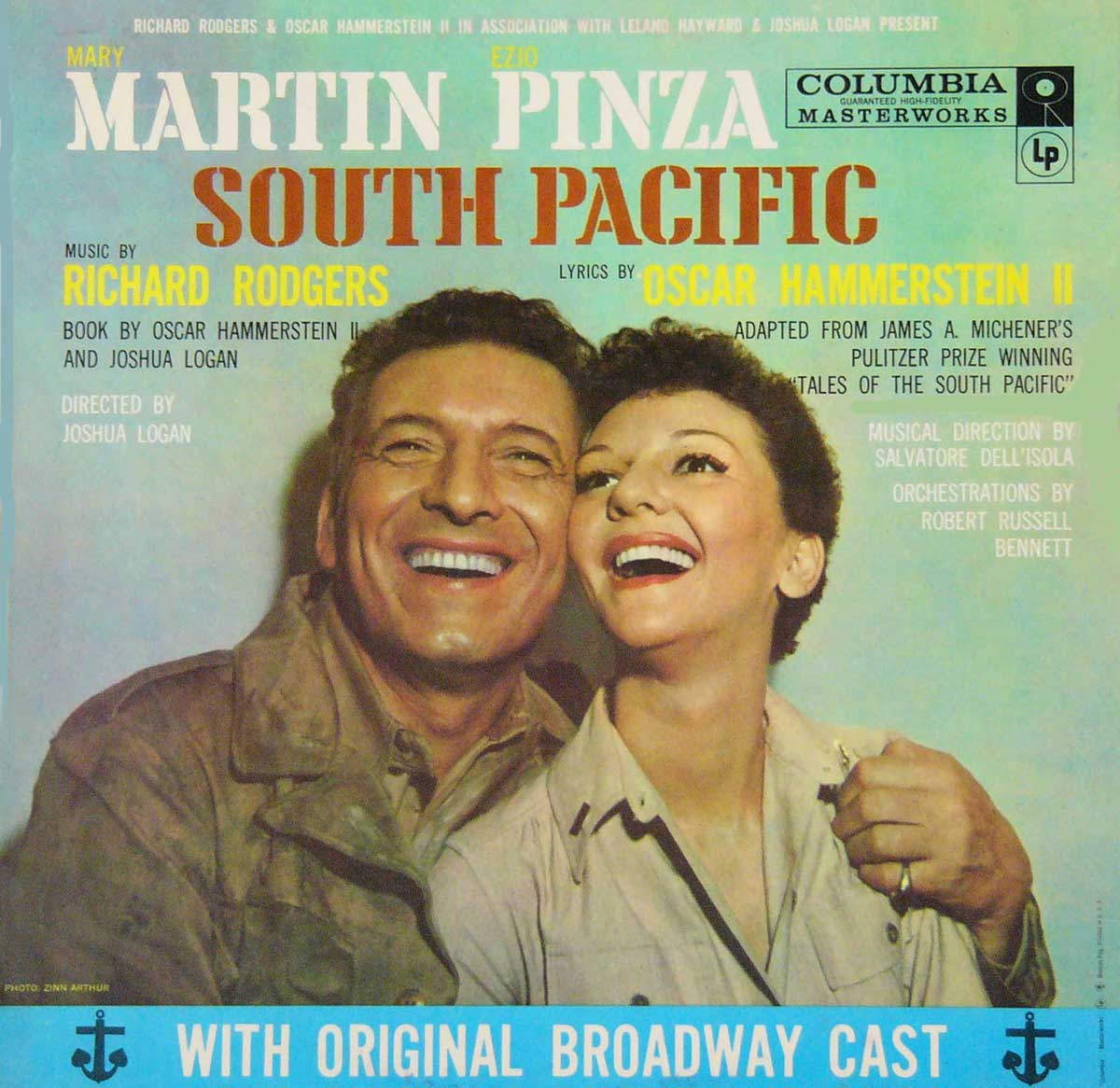
South Pacific album cover

The Rodgers and Hammerstein hit South Pacific, in an elaborately packaged reissue of the 1949 original Broadway cast album. Columbia. (Image courtesy of the author.)


When the CD made its appearance in the 1980s, musical fans were overjoyed. Approximately 80 minutes of a show’s score, (even more on double-disc sets), could now be immortalized. Dialogue intros, instrumental breaks, and even “cut” numbers created a comprehensive theatrical experience. There were also re-issues of shows originally released on 78s, (with missing numbers restored), plus re-issues of older, lesser-known productions, previously available only on hard-to-find, pricey, LPs.

Thanks to today’s proliferation of digital music sources, prices of original cast LPs have dropped drastically. Even the rarest rarely top $100, and most can be acquired for considerably less than $20 on eBay; new musical CDs average $15-20.

For the adventurous album collector, however, the most fun to be had is at garage sales, where beckoning record stacks await. Sooner or later, you’re bound to happen upon a forgotten “find” lurking amongst all those Sound of Music albums. And if it’s that short-lived debacle Dracula: The Musical, be sure and let me know. I’ve been looking for that one for years!


Donald-Brian Johnson is the co-author of numerous Schiffer books on design and collectibles, including “Postwar Pop,” a collection of his columns. Please address inquiries to: donaldbrian@msn.com
Five of a kind: The Dionne Quintuplets

May 2024

SMACK DAB IN THE MIDDLE

Five of a kind: The Dionne Quintuplets

by Donald-Brian Johnson

In the 1930s, Shirley Temple was America’s sweetheart.
Ah, but there was only one Shirley. There were five Dionnes.

Ninety years ago, on May 28, 1934, the Dionne sisters, the first—and so far, only—set of identical quintuplets, were born in Canada. In this day of advanced fertility treatments, multiple births are nothing to get goggle-eyed over. In the 1930s, the odds were one in 57 million. The “five most adorable little girls in the world” made headlines.

Cécile, Marie, Yvonne, Emilie, and Annette Dionne first saw light in a ramshackle farmhouse near Corbeil, Ontario. Their mother, Elzire, had already given birth to six children. She was just 25. Their father, Oliva, with whom the quints had a turbulent relationship, was... well, as he remarked in an early news report, “I’m the kind of fellow they should put in jail.”

The initial survival of the Dionnes was credited to “the country doctor” who delivered them, Dr. Allan Dafoe. The quints weighed in at just 10 pounds, 1-1/4 ounces—total. Dafoe was so uncertain of their fate that he baptized them before the arrival of the parish priest.
Oliva Dionne quickly explored his options. Within three days of their arrival, he’d agreed to exhibit his daughters at the Chicago World’s Fair for $250 a week (plus 23 percent of ticket receipts, if all five lived.)

At that point, the government of Canada stepped in. A court order prohibited Papa Dionne from exposing his daughters to “certain death in some vaudeville show,” and appointed guardians. With their parents sidelined, the Dionnes were on their way to worldwide celebrity.

The “Dafoe Hospital” was built near the family farmhouse. There, the sisters took up residence in a communal crib. As the girls grew, they were photographed constantly, in staged replications of their daily lives: toasting with glasses of milk on their birthday; peering through heart-shaped cutouts on Valentine’s Day: pulling the beard of Dr. “Santa” Dafoe on Christmas. Hollywood came calling, and the quints starred in three films loosely based on their lives, beginning with The Country Doctor in 1936.

And there were the visitors. Each summer brought more than 100,000 guests to “Quintland.” Upon arrival, the curious could view the quints at morning and afternoon “showings” through one-way, soundproof glass. Meanwhile, outside his farmhouse Papa Dionne ran a souvenir stand, complete with personally autographed “fertility stones.”

Dionne souvenirs were big business. If you couldn’t afford a trip to Canada, you could at least buy a Dionne hankie, douse yourself with Dionne perfume, wash up with Dionne soaps, or sing along to “Fifty Chubby Tiny Toes—The Quintuplets’ Lullaby.” There were Dionne picture books, Dionne spoons, paper dolls, fans, calendars, games, and dolls. Lots of dolls. The most famous of these, designed by Madame Alexander, jumpstarted her dollmaking career. Advertising endorsements ranged from Karo Syrup to Palmolive Soap. Since so many Dionne collectibles were produced, they remain remarkably affordable. Most sell for well under $50, except for those Madame Alexander dolls, still a pricey $300-plus/set.


Learning the ABCs, graphite, and watercolour

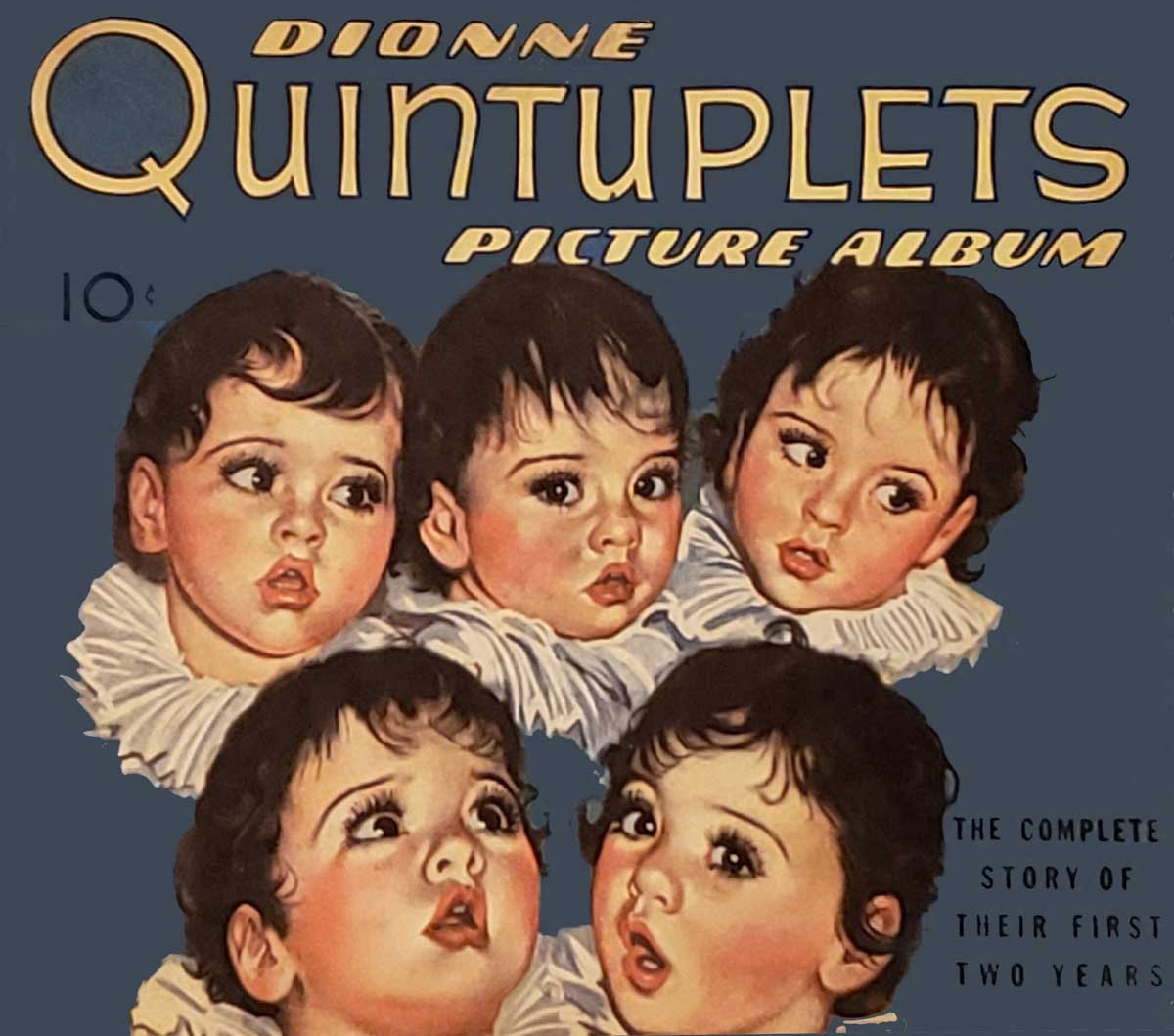
The Dionne Quintuplets

Picture books featuring the Dionne Quintuplets were issued at least annually. This one covers “their first two years.” Dionne memorabilia courtesy of Joyce Cramer. (Image courtesy of the author and photography associate Hank Kuhlmann)


Shortly before their 10th birthday, the quints were reunited with the rest of the family. Papa Dionne built a $75,000 mansion, with funds from the girls’ varied endorsements. The reunion was not a happy one. By the time the Dionne Quintuplets turned 20, their “novelty” appeal had largely faded. Following Emilie’s death in 1954 from an unattended epileptic seizure, the sisters became estranged from their parents. Today, only Annette and Cécile survive, and rarely emerge from self-imposed seclusion.

In a 1964 McCall’s article, the sisters wrote, “quintuplets seem to bring out the best and the worst in people.” The Dionnes lived through the worst. The best? The image of youthful joy they conveyed, which cheered a Depression-weary age. As one devotee put it, “the world never ceases to marvel at the phenomenon, and affectionately admire the charming reality of the five most winsome members of its teeming population.” 

Donald-Brian Johnson is the co-author of numerous Schiffer books on design and collectibles, including “Postwar Pop,” a collection of his columns. Please address inquiries to: donaldbrian@msn.com
Planting time: Fascinating figural planters

April 2024

SMACK DAB IN THE MIDDLE

Planting time: Fascinating figural planters

by Donald-Brian Johnson

Spring is here at last! Time to break out the spades, and break in those new gardening gloves. Time to ferret out that trowel from wherever you stashed it last fall. Yes, time’s a-wasting, and Mother Earth is waiting!

That is, she’s waiting if you actually have a place to plant a garden. Or if you have a green thumb. Preferably both. If not, there are remedies besides artificial greenery: indoor ceramic planters! Not just your traditional bowls and rectangles, these are figural planters, which came into their own in the 1940s and ‘50s. Guaranteed rays of decorative sunshine, figural planters turn any environment into a garden party.

Lifting non-green-thumbers out of their doldrums was probably not the first consideration of the artisans who created these planters. During the early years of the 20th century, America had relied on overseas imports for affordable decorative accents. World War II changed all that. Imports were unavailable for the duration, and inexpensive home décor items (for instance, planters) needed to be home-grown.

Ceramic designers of the World War II years could, quite literally, be called “designing women.” With much of the male population otherwise occupied overseas, female designers surged to the forefront. California alone saw the rise of such talents as Kaye (aka “Kaye of Hollywood”), Yona Lippin, Betty Lou Nichols, Florence Ward (Florence Ceramics), and Jimmie Lee Stewart of deLee Art. But when it came to figurines, the most prolific of them all was Hedi Schoop.

A Swiss émigré, Schoop successfully translated her early work with plaster dolls to the ceramic medium. Acclaimed as “very whimsical and smart,” her figurines won fans due to their flowing lines, eye-catching glazes, and “in-motion” poses. Schoop also served as an inspiration to other designers, including both Kaye and Yona, whose career paths began at her factory.

At first, stand-alone figurines took center stage. Peasant girls, wistful maidens, and courting couples by Hedi and her contemporaries transferred quickly from store shelves to home shelves, as consumers snapped them up. Buoyed by the response, designers expanded their inventory themes. Soon joining the ceramic throng were international characters, children, animals, and even fantasy and fairy tale figurines. The public devoured these too, but still wanted more. Designers once again obliged, and released accompanying pieces (candlesticks, soap dishes, bowls, ashtrays, et al), in colors and designs that complemented the original figurines. Most popular though, were figurals that did double duty, such as wall pockets and “lady head vases” with openings intended to hold a small spray of flowers. At the very top of the double-duty list: figural planters.


Learning the ABCs, graphite, and watercolour

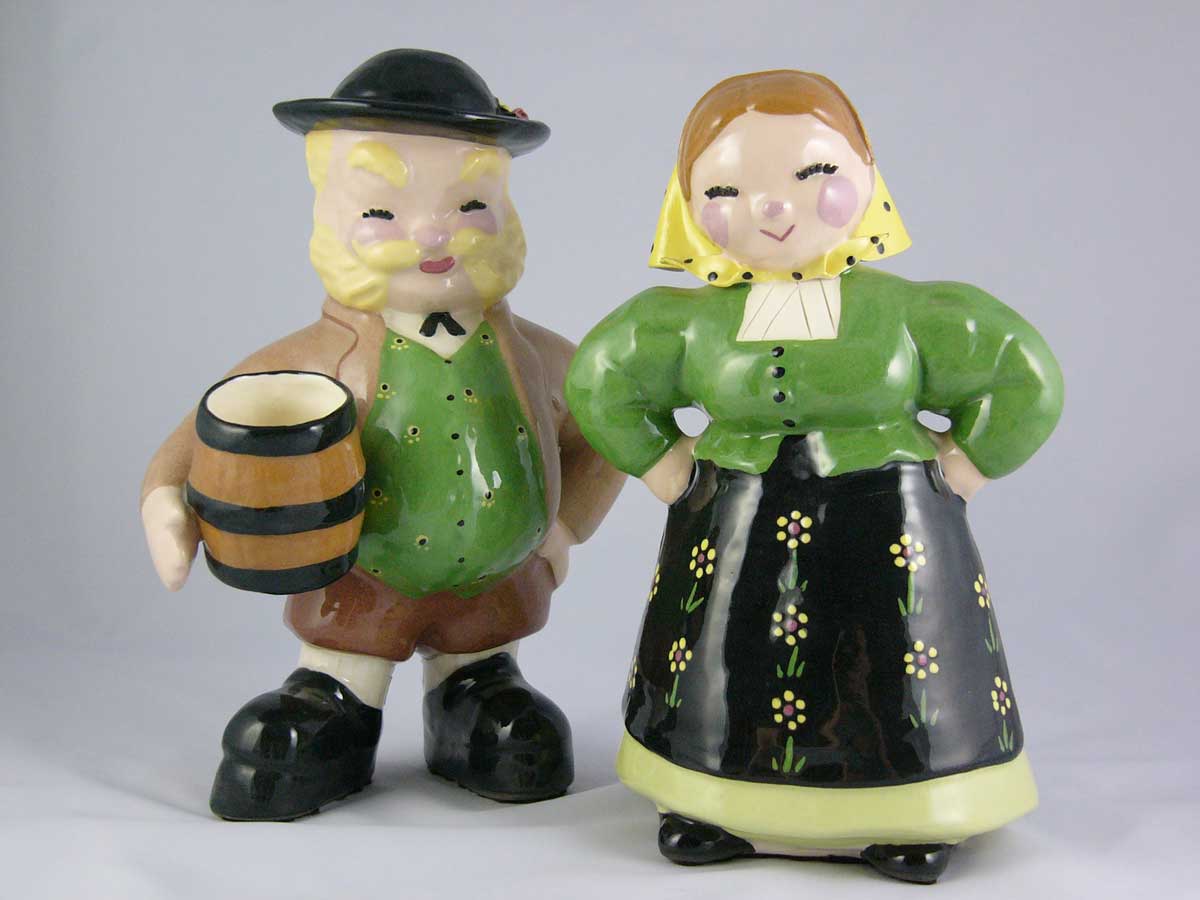
“Fritz & Anna,” the “Pleasant Peasants”

“Fritz & Anna,” the “Pleasant Peasants” by Betty Lou Nichols. Fritz’s beer keg doubles as a planter. Tallest figure, 9-1/2” h., $150-175/pr. Image courtesy of the author and photo associate Hank Kuhlmann


Learning the ABCs, graphite, and watercolour

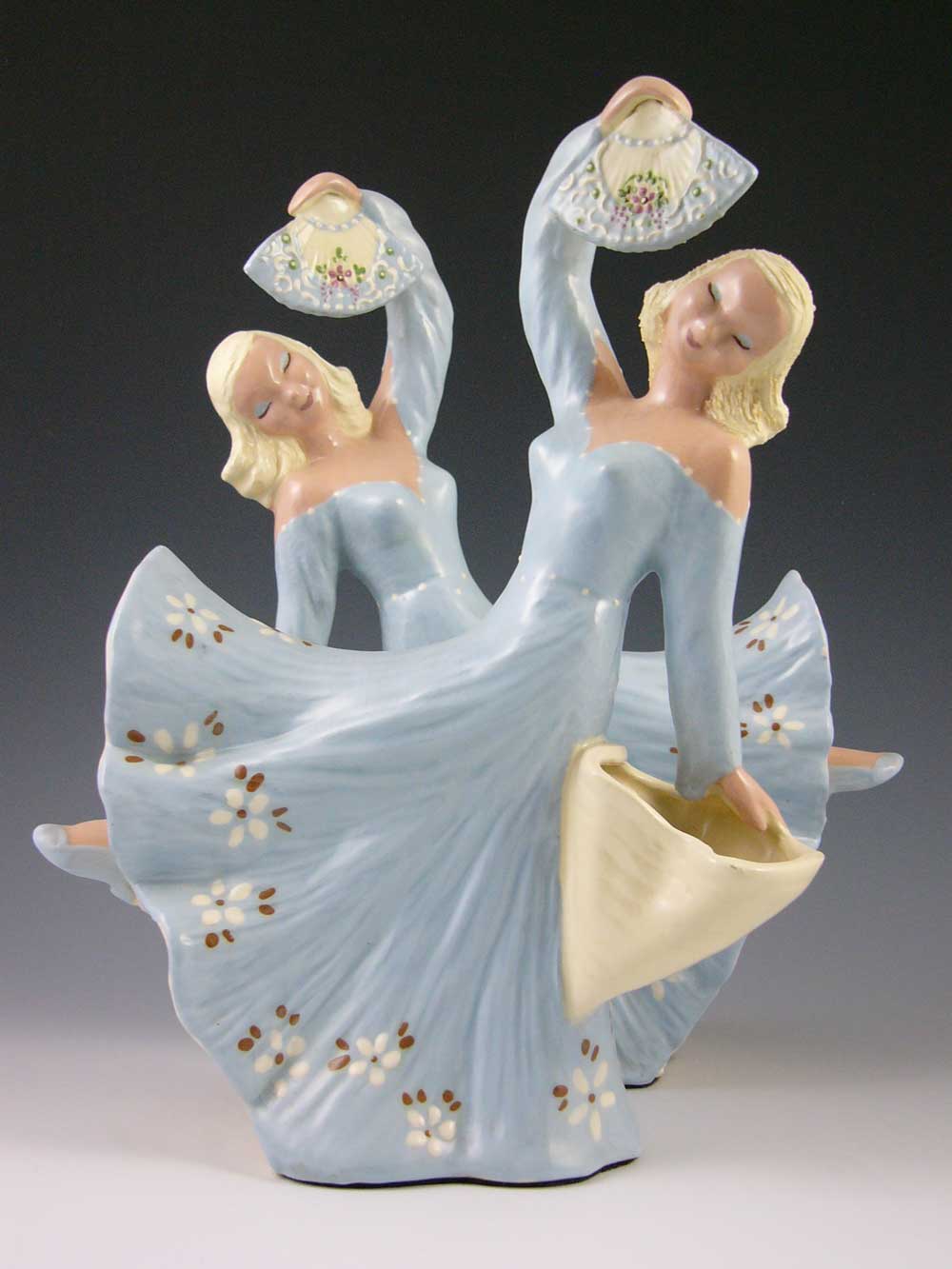
“Blue Dancers”

Hedi Schoop’s graceful “Blue Dancers” kick up their heels. 12-1/2” h., $175-200/pr. (Image courtesy of the author and photo associate Hank Kuhlmann)


No need now for extra pieces such as bowls or ashtrays. Here, the secondary use was built-in. It was a figurine. It was a planter; It was a figural planter! Even better, the “useful” part flowed directly from the figurine design. Now, those peasant girls by Hedi, Kaye, and Yona carried empty buckets, pails, or baskets waiting to be filled with greenery. Some held out open aprons waiting to overflow with the flowers you’d supply, or cradled their arms in anticipation of the floral bouquets that would soon fill them. Exotic Asian figurines held oversize open fans... sleepy babies curled up next to open crescent moons... and elegant ladies lounged against open-top tree stumps or columns. There were even the occasional oddities: the Betty Lou Nichols “Peasant” couple “Fritz and Anna,” with Fritz’s beer keg serving as a planter... the deLee Gay ‘90s girl with a planter opening in her bustle... the clown (by an unnamed designer) waiting for a cactus to grace the back of his baggy pants.

Whether the blossoms you plant are real or plastic, vintage figural planters make attractive containers for mini-gardens. And, since the majority sell for well under $100, the prices are equally attractive. You might say it’s a collecting hobby that just sort of grows on you.

Donald-Brian Johnson is the co-author of numerous Schiffer books on design and collectibles, including “Postwar Pop,” a collection of his columns. Please address inquiries to: donaldbrian@msn.com
Hoppin’ down the bunny trail: America’s Easter traditions

March 2024

SMACK DAB IN THE MIDDLE

Hoppin’ down the bunny trail: America’s Easter traditions

by Donald-Brian Johnson

“Here Comes Peter Cottontail,
Hoppin’ down the bunny trail,
Hippity, hoppity, Easter’s on its way!”
(Steve Nelson & Jack Rollins, 1950)

That Gene Autry. First, the cowboy crooner set his sights on Christmas, giving us the lowdown on “Rudolph the Red-Nosed Reindeer” and offering the timely reminder, “Here Comes Santa Claus.” Then, Gene sidled on down the trail a-piece, until he found another holiday worth celebrating. The result: 1950’s bouncy “Here Comes Peter Cottontail.”

Holiday-happy Irving Berlin put all his eggs in one basket, too. “Easter Parade” started off as a song, then became the title of the 1948 Judy Garland/Fred Astaire movie smash. No bunnies, just a tuneful tribute to a beloved Easter Sunday tradition: folks decked out in bandbox finery, strolling down Fifth Avenue (Berlin was a master of re-invention. When an early composition “Smile, and Show Your Dimple” flopped, he put it away until 1933, when “Easter Parade”– the same tune with new lyrics – debuted).

Sprightly songs are one thing. But marshmallow Peeps? Be-ribboned bonnets? Frisky bunnies delivering candy-stuffed baskets? Just how did a major Christian holiday become teamed up with such unlikely springtime bedfellows? Well, blame it on that ancient Anglo-Saxon goddess “Eostre.” When Christianity arrived, it meant easing converts out of long-held pagan practices. Since the spring observance of Christ’s Resurrection roughly coincided with the timing of “Eostre’s” festival, a new celebration supplanted the old. The name remained (sort of); so did “Eostre’s” earthly symbol: the rabbit.

Lent was a period of penitence, “Mardi Gras” the final fling leading into it, Easter the grand celebration of its close. Gradually, Easter’s religious aspects were joined and complemented by secular traditions, celebrating spring as a season of rebirth and renewal. And, from the early 1900s onward, many of those traditions have enjoyed their greatest popularity in America:

Easter eggs
In medieval times, eggs, a symbol of new life, were not eaten during Lent. When Easter rolled around, exchanging Easter eggs seemed egg-zactly right. Back then, the wealthy wrapped theirs in gold leaf; the rest of the world settled for eggs color-stained with flower petals.

The Easter Bunny
In Germany, the “Oschter Haws” (“Easter Hare”) hides nests of brightly colored eggs. German immigrants brought the tradition to America in the 1700s (Incidentally, says the National Confectioner’s Association, 76% of Americans think chocolate bunnies should be eaten “ears first!”).

Easter cards
To boost sales, a printer in Victorian England spruced up generic spring greeting cards with bunnies. Today, while not leading the Easter parade, Easter cards follow Christmas, Valentines Day, and Mother’s Day cards in popularity.


Learning the ABCs, graphite, and watercolour

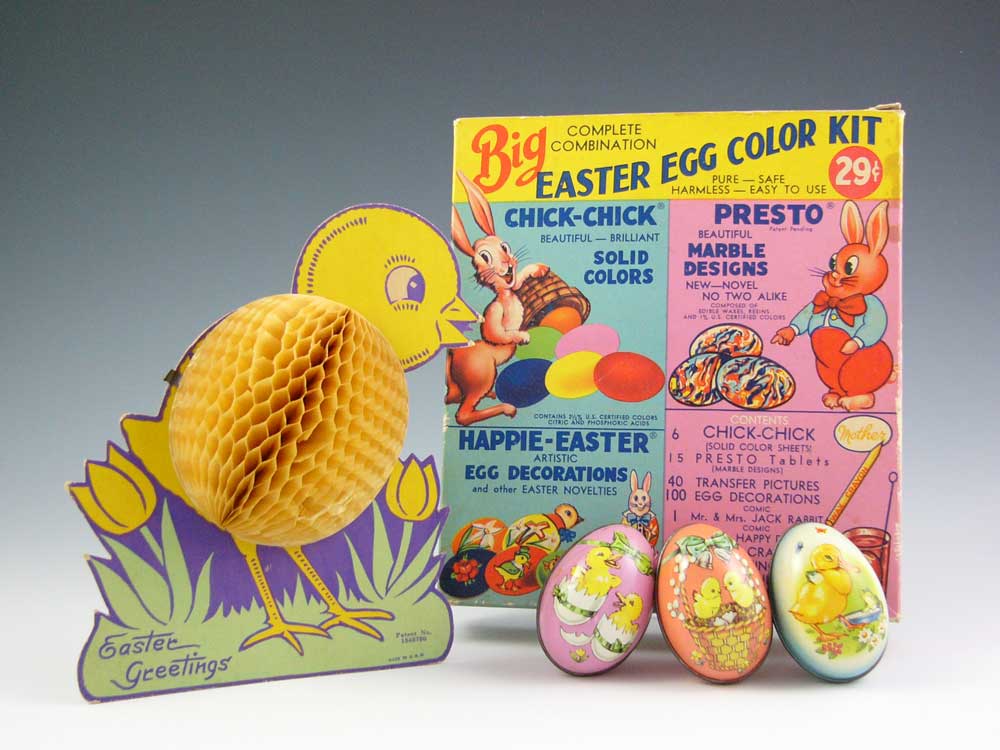
Honeycomb chick table decoration

Honeycomb chick table decoration, egg dye kit, and metal eggs with Easter decals. New/old stock from Campbell’s Department Store, Bridgewater Iowa, late 1940s. Chick and dye kit, $15-20 each; eggs $5-7 each. (Image courtesy of the author and photo associate Hank Kuhlmann)


Learning the ABCs, graphite, and watercolour

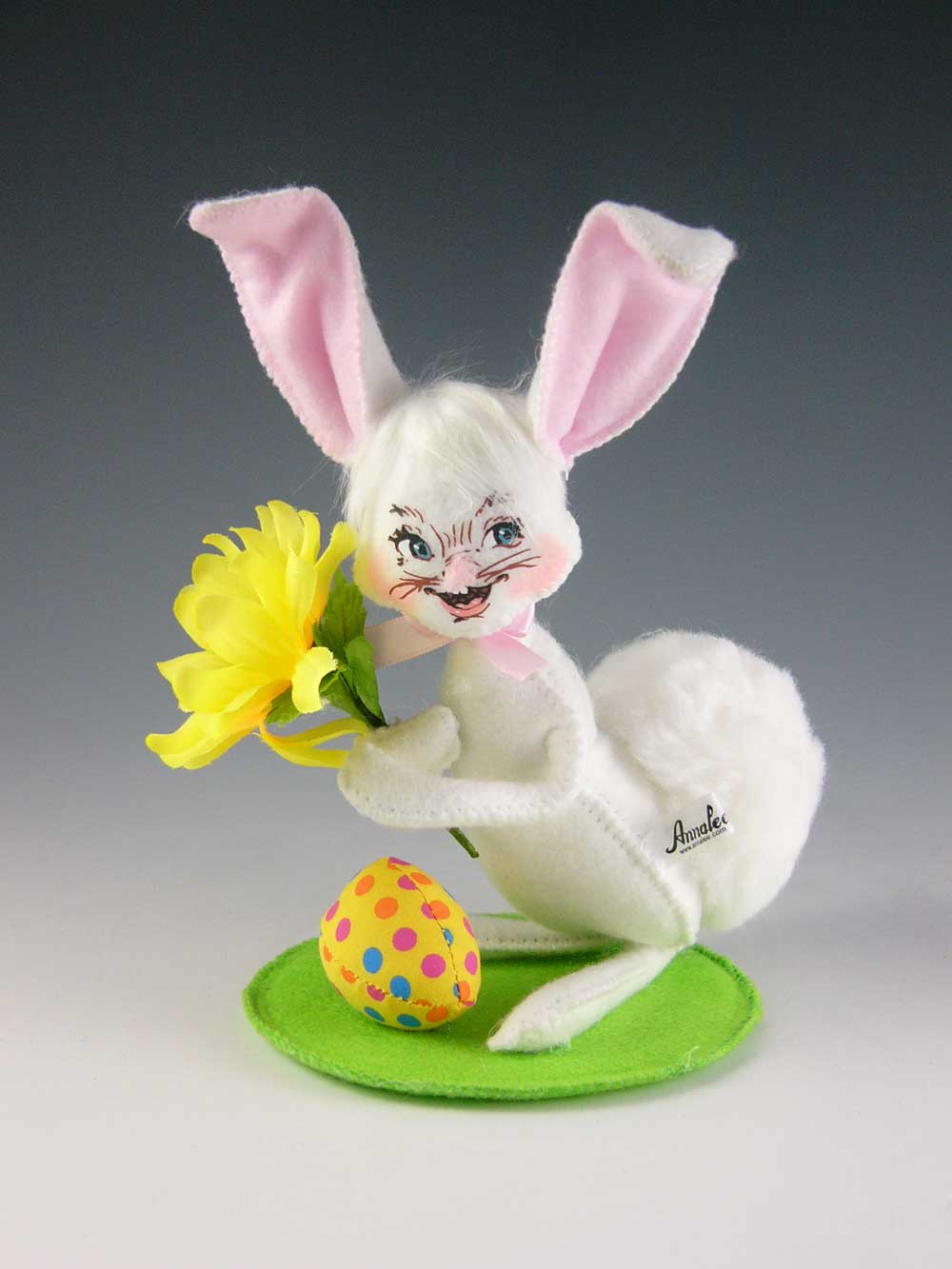
Flexible fabric Easter Bunny

All set for his big day: flexible fabric Easter Bunny by Annalee. $20-25. (Image courtesy of the author and photo associate Hank Kuhlmann)


Easter lilies
Early Christians viewed the lily as a symbol of purity. The white trumpet lily made its U.S. debut in the early 1900s, by way of Bermuda.

Peeps
Every Easter, we choke down more than 700 million of these marshmallow confections. Yellow chicks are the most popular, although there are Peep bunnies and eggs, too. It takes six minutes to make a Peep. In 1953, it took 27 hours.

Jellybeans
16 billion are gobbled up each Easter Sunday (and swept up for weeks afterward). Boston candy maker William Schrafft came up with the concept during the Civil War; customers were encouraged to send these nearly indestructible treats to soldiers.

Easter bonnets
It’s long been considered “good luck” to wear something new at Easter; 18th-century author “Poor Robin” advised, “At Easter, let your clothes be new, or else be sure you will it rue.” Even in the direst days of the Depression, a new Easter bonnet, (or, at least a refurbished old one), remained within the range of most pocketbooks. As the inimitable Irving Berlin put it:

“In your Easter bonnet, with all the frills upon it,
You’ll be the grandest lady
in the Easter Parade.”

(Unless, of course, you’re Fred Astaire. In that case, a top hat will do, and you’re the “grandest fella!”)
Happy Easter!


Donald-Brian Johnson is the co-author of numerous Schiffer books on design and collectibles, including “Postwar Pop,” a collection of his columns. Please address inquiries to: donaldbrian@msn.com
Valentine boxes evoke childhood memories

February 2024

SMACK DAB IN THE MIDDLE

Valentine boxes evoke childhood memories

by Donald-Brian Johnson

Here’s a memory-jogger: it’s Valentine’s Day in mid-20th century America, and across the country, nearly every elementary school classroom has something in common. Atop each weatherbeaten desk sits a “valentine box.” It began life as just another old shoebox, but now, carefully covered in colorful construction paper, and festooned with cutout red hearts, it’s been transformed (For the less artistically inclined, there were “valentine bags”—grocery sacks, minus the construction paper, but still sporting an array of drawn or pasted hearts).

Each receptacle had an opening cut into it, ready to receive its quota of cards — and there was a quota. Everybody gave a valentine, and everybody got one. That included the tough kid across the aisle who, every so often, “borrowed” your lunch money—and that girl with the braids, who accidentally mushed your favorite Crayola.

Lessons over, the teacher finally announced, “you may look at your valentines.” Box covers came off, bag tops were unrolled, and each student eagerly perused his or her “take” (after carefully counting them first). There were generic “to a friend” valentines, with illustrations of romping cats or puppies.

There were funny valentines, with chortle-provoking corny puns. There may even have been a valentine with an innocent romantic message — one that had you looking at that girl with the braids through different eyes.

Then, the school bell rang. Your valentines were packed up, brought home, and piled in a box of “school papers,” alongside their compatriots from previous years. Out of sight, and out of mind. Remember?

According to legend, the first valentine greeting was sent by the man himself: St. Valentine (Actually, there are at least three “St. Valentines,” each clamoring to be recognized as the day’s patron saint, but here’s the most romantic story).
A third-century clergyman, this Valentine was imprisoned for performing marriages in defiance of Emperor Claudius II, who’d decreed that all men of military age must remain single. While in prison, Valentine fell in love with his jailer’s daughter, declaring his feelings in a note signed “from your Valentine.” Since Valentine was eventually beheaded, the story lacks a happy ending, but nonetheless, a tradition was born.

The oldest-known written valentine dates from 1415, a poem the Duke of Orleans sent to his wife while imprisoned in the Tower of London. Shortly thereafter, King Henry V began sending valentines to his favorite, Catherine of Valois, although Henry hired a professional poet to do the heavy lifting.

By the 1700s, kings and dukes weren’t the only ones dispensing valentines. Each Feb. 14th, handwritten valentine messages made their way across all levels of society, often accompanied by small gifts. The dawn of mass printing and inexpensive postal rates meant that, by the early 1800s, just about anyone who wanted to could send, (and hopefully, receive), a valentine.

In the 1840s, ready-made valentines swept the United States, thanks to Esther A. Howland (now hailed by grateful retailers as the “Mother of the Valentine”). Her creations were quite lavish, incorporating ribbon, lace, and colorful bits of material. Joining the traditional visuals of hearts and flowers was “Cupid,” that little winged fellow with the bow and arrow. It was a logical choice: in ancient Roman mythology, Cupid’s the son of Venus, goddess of love.


Learning the ABCs, graphite, and watercolour

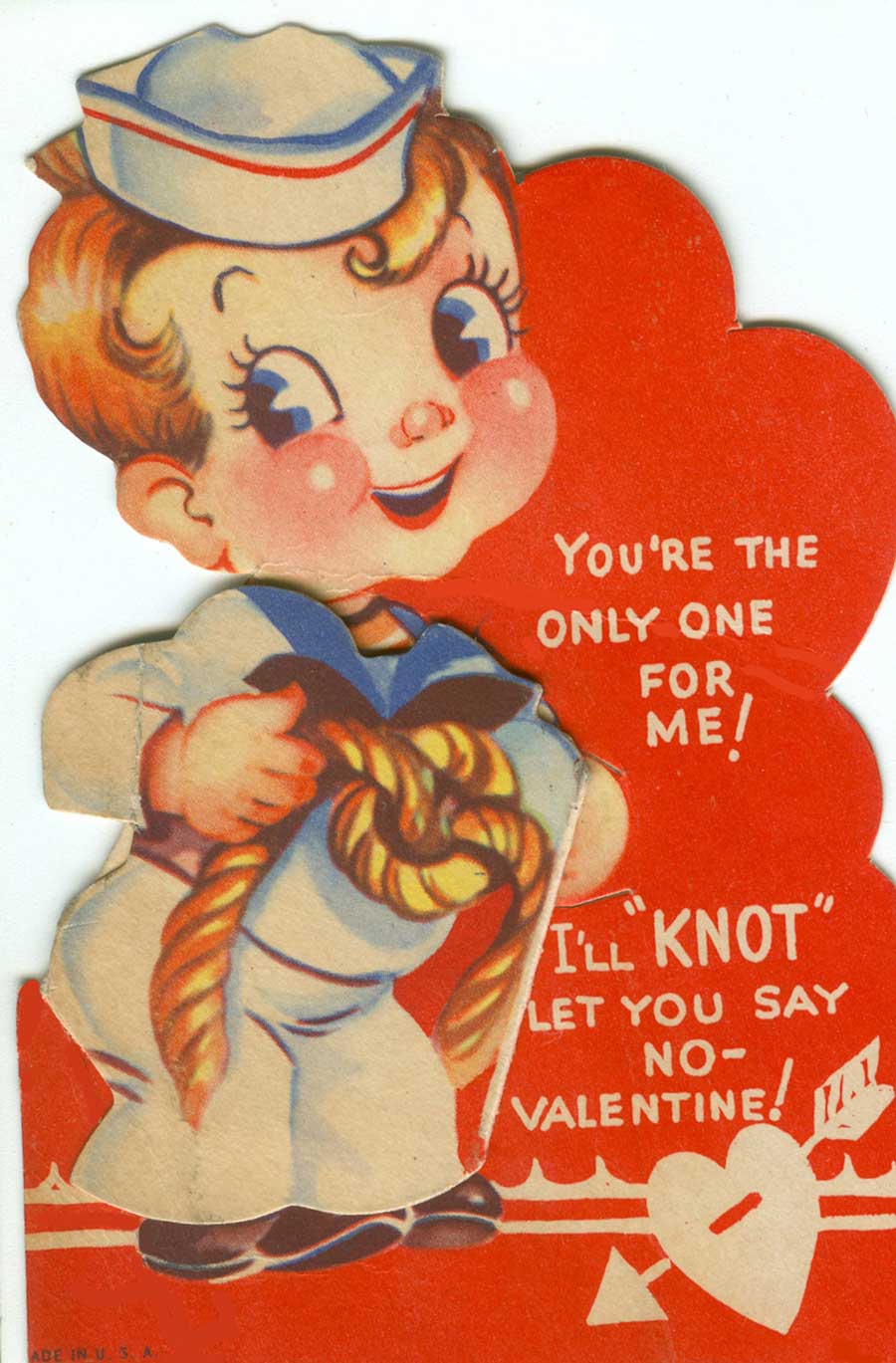
Vintage Valentine card

A Nautical-themed single-sheet Valentine from the 1940s. Image courtesy of the author and photography associate Hank Kuhlmann.


Nowadays, the Greeting Card Association notes that more than one billion valentines are sent annually, vs. two-and-a-half billion Christmas cards. Women buy 85 percent of them (which should have plenty of husbands and boyfriends hanging their heads in shame).

Valentines (including the ones you saved from grade school), remain popular with collectors, who enjoy their colorful visuals, whimsical themes, varied functions (for instance, pop-up, or moving-part valentines), and affordable prices (most are under $5). Displayed singly, or framed in a montage, vintage valentines add a touch of nostalgia to any décor. They’re also guaranteed to rekindle plenty of nostalgic memories—of carefree days, childhood friends. . .and, of course, the “valentine box.”


Donald-Brian Johnson is the co-author of numerous Schiffer books on design and collectibles, including “Postwar Pop,” a collection of his columns. Please address inquiries to: donaldbrian@msn.com